Sunday, September 9, 2012

I need to invest in a raincoat.

You would think after spending all summer in rainy London I would have a raincoat, but I don't. It's really unfortunate, though, because sometimes an umbrella just isn't enough.

For one of my newsroom shifts for class, I went out with a reporter doing a story about high school football games starting early due to rain, and my job was to take still photos to go with the story. It was a lot of fun but the only bad thing was it was raining. We really lucked out though because the first time we went to shoot it wasn't actually raining (just really, really, really, really, really humid) and when we went out for the live shot there was a ledge we could stand under and stay dry.

I thought the overall rain experience was pretty bad, but it was NOTHING compared to the next week.

My photos from high schools moving their football game start times up.

I went out to this SEC JC Pep Rally in Jefferson City with a reporter. I was all excited because it was a pep rally! There would be excited fans, music and cheering and it would so much fun and there would be so many opportunities for great pictures.

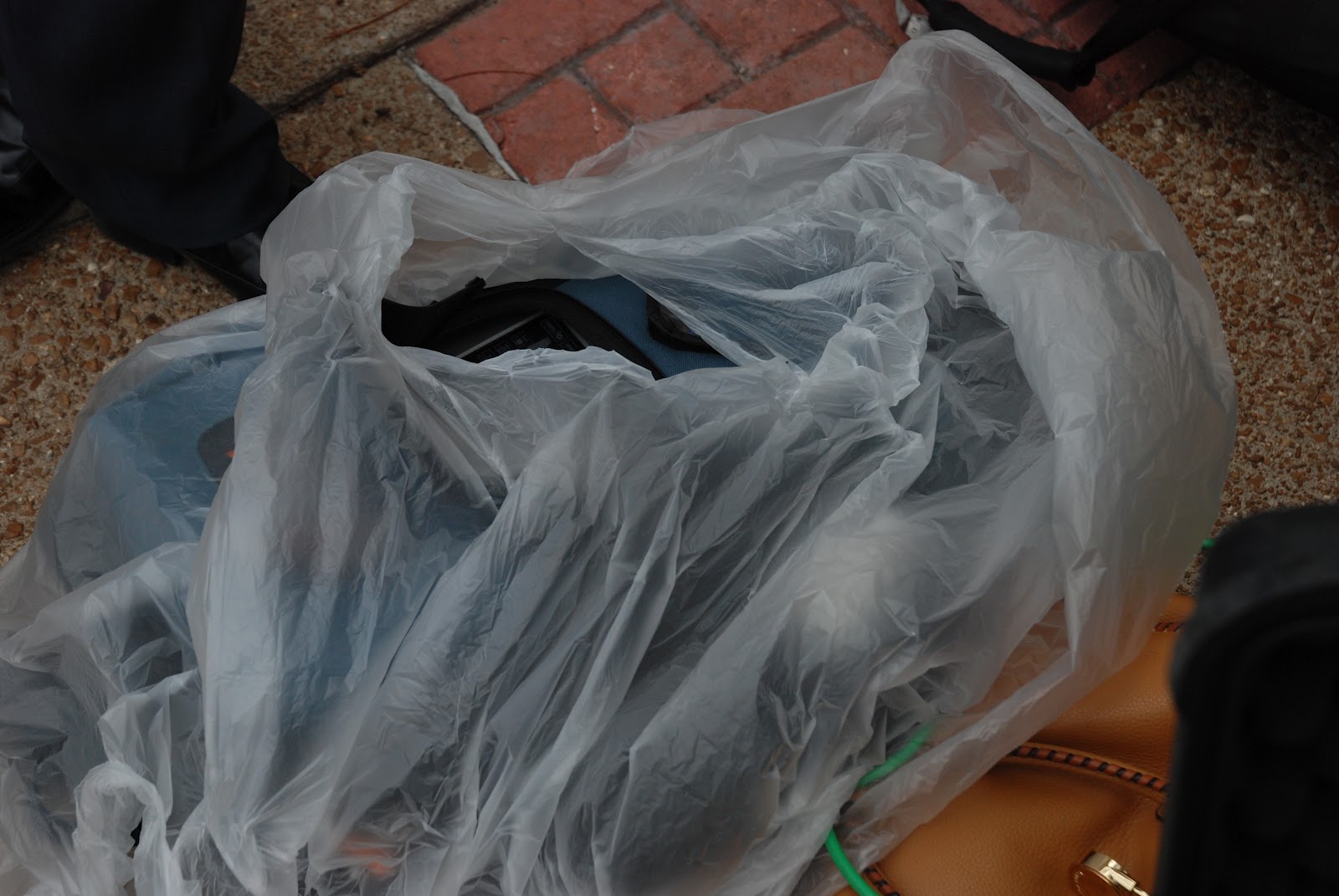
And then the storm started rolling in. First step in the field with the potential for rain is to protect the equipment. In case of no rain bags, use trash bags.

Protected camera
Protected backpack (for live shots)
The weather was beautiful earlier in the day, so none of us were prepared for the rain. I had an umbrella, but I can't take pictures and hold it at the same time and I didn't want it to break in the wind, so that was pretty much useless. It started pouring and we all got drenched. There was the live reporter, trying to report live in the middle of a storm, another reporter doing a story for later in the evening, a girl shadowing the live reporter for her class, and me.


The girl who was shadowing was trying to communicate with the producers back at the station, so she was on the phone most of the time. The live reporter's scripts got drenched so he had to read off his phone. Both of the phones ended up broken because of the rain. 

I'm struggling with my camera, trying to keep it dry with a trash bag wrapped around it but also have access to all the right buttons. I didn't have any sort of jacket with me so I got super cold and completely soaked.


Despite the miserable situation, I got some great photos, the first live shot went well (the second one ended up freezing on air) and the other reporter's story ended up great as well. And now I know I need a raincoat because the situation would have improved about 10 times with one.

My photos from the SEC JC Pep Rally.

Wednesday, August 29, 2012

There is a technique to killing flies.

I went on this midwest road trip extravaganza with my parents, and compared to my travels around Europe (staying in cheap hostels, on a tight budget), it was like an all-expenses-paid luxury vacation.


View Midwest Road Trip Extravaganza in a larger map


The trip started in Austin, through Oklahoma (with dinner in Muskogee) and we stopped for the night in Joplin. Day two went through Columbia where I dropped off my car and continued on to Champaign, Illinois. On day three we drove the short distance to Lafayette, Indiana to visit my uncle and aunt. Day four brought us to Cincinnati, Ohio, to visit my grandpa. Day five was the end of the trip and we drove through Kentucky back to Columbia, Missouri, completing the midwest loop circle and bringing me back to school.

Anyway, there was a fly in the hotel we stayed at in Champaign, Illinois. No one wants to sleep in a room that has a fly flying around in it, so we had no choice but to kill it. Flies are really hard to kill because they have such good reflexes and it's even harder when you don't have a fly swatter. But it is possible with this technique from my dad.


You have to flick the fly with your finger. You have to wait for the fly to land somewhere and sneak up on it really slowly so it doesn't fly away. You can't aim directly for the fly, because it'll sense your movement and fly away before you hit it. So, you have to aim for right in front of the fly or right behind the fly. That way, when it senses your movement and flies away, you will hit right where the fly is on its way away from you. You just have to become one with the fly and anticipate whether it will fly forward or backward.

Refer to the following diagram and live your life fly-free:


Saturday, July 21, 2012

Coldplay filmed part of their video Fix You right outside my door.

My roommate informed me that parts of Coldplay's video Fix You was filmed on Waterloo Bridge, which happens to be right outside our door. They filmed it way before we actually lived here, though. But still. We were both pretty excited.

What did we do to show our enthusiasm? We remade the video! I think ours turned out just as good as the original, if not better.

Our Remake:


The Original:


Another fun fact, I may have visited Chris Martin's (the lead singer of the band) house! I just looked up the address on Google, so accuracy is not guaranteed. It was, however, the only house on the block that was gated and it had cameras all over it.

The street Chris Martin (possibly) lives on 
38 Park Hill Road - (possibly) Chris Martin's house

Sunday, July 15, 2012

The U.K. doesn't respect journalism as a profession as highly as the U.S.

Every once in awhile I learn something that has some actual intellectual value. This little piece of knowledge was gathered during the time I spent interning in London. It was originally written as a paper for my class.


Never use anonymous sources. Always verify information with multiple sources. Always cite those sources. Always tell the truth. A journalist’s integrity is all they have and one slip up could discredit a journalist forever. These are the things that are drilled into our heads over and over in all of our journalism classes because they are the foundation for journalism. But some people just ignore them, or maybe they never learned about them, or maybe they just don’t care, and these are people who report for and edit tabloids. There are some in the U.S, but there are a lot in the U.K. and they are very widely read.


According to the Audit Bureau of Circulations, the top three most widely read papers in the U.K. are The Sun (circulation 2,582,301), the Daily Mail (circulation 1,945,496) and the Daily Mirror (circulation 1,102,810), which are all tabloids, filled with sensational headlines and questionable news. The top 3 most widely read papers in the U.S. are The Wall Street Journal (circulation 2,117,796), USA Today (circulation 1,829,099) and the New York Times (circulation 916,911), which are all largely trusted papers with high ethical standards. More people read The Sun than The Wall Street Journal. The majority of people who are reading newspapers in the U.K. are getting sensationalized, questionable news.

Last semester in my History of American Journalism class, I learned about how journalism has changed over time in America. It used to be all tabloids and all sensationalized news, but then, over time, higher ethical standards came into place and tabloids were phased out and replaced with ethical journalism. This transition shows how America began to respect journalism as a profession. It seems as though the U.K. is lagging behind the U.S. It’s still in the phase of sensationalized news and tabloids, and over time it will follow a pattern similar to the U.S. and journalism will gain more respect.

I think a major turning point is happening right now for the U.K. with the phone hacking scandal. It seems as though every tabloid in the U.K. was hacking into people’s phones for information. All the editors and higher-ups of these papers claim they all knew nothing about it. One of my co-interns made the observation that if many papers in the U.K. were hacking into people’s phones, it is probably happening all over the world, and even in the U.S. I disagree for several reasons. I think if you know what to look for it would be easy to spot. The reporter would either not cite a source or cite an anonymous source, which would instantly put up a red flag. In journalism, anyone should be able to point to a piece of information and be able to easily trace it back to a source. Also, I think the U.S. is stricter on libel. A person in the U.S. would probably make a huge deal out of their phone being hacked, whereas it seemed to slip under the radar for several years in the U.K.

The popularity of tabloids in Britain shows that the U.K. doesn’t regard journalism as a highly respected profession. In the U.S, journalists go to school for at least four years and take several classes on journalism ethics and the practice before getting a job in the industry. Many people I work with at my internship at CBS didn’t even study journalism in school. I think that because of all the scandalous tabloids and sensationalized news reported in the U.K. many people just don’t respect it. I think the U.S. holds journalism to a higher standard, it’s a respected profession, and regarded more highly than in the U.K.

Wednesday, July 4, 2012

Boots doesn't open until 9 a.m.

It started out like any other morning; my alarm went off too early, I snoozed an extra 15 minutes, I finally dragged myself out of bed and made my way to the bathroom. I pumped myself up to get in the shower and experience the absolute worst five seconds of my day.

The shower in my flat points directly at the shower door, so you have to be in the shower with the door closed when it starts or else it will spray water all over the floor. Like any other shower, the water starts out freezing cold. There is nowhere to hide and escape the water. Every morning I have to count myself down and prepare myself to turn on the water and get blasted by ice for a good five seconds before the water warms up. It's easily the worst part of my day. Good thing I shower in the morning, then, because it can only get better from there, right?

Wrong. This morning continued like normal until I was ready to dry my hair. I let most of my hair air dry, but I have to blow dry my bangs because I straighten them (and they need to be complete dry for that). If I don't straighten them, they become a weird curly mess on my forehead. I turn to my roommate's desk where we keep our shared hair dryer, and it's not there. I look around the room a little bit and it's still nowhere to be found. I go into problem solving mode.

My roommate left for work before me, so if she used the blow dryer she would have done it outside of our room. I go check in all the bathrooms. It's not in any of them. I check the kitchen and living room. No luck. I check our room again. It's gone. Unfortunately for me, none of the other 10 girls I live with are awake yet, so I can't just go borrow their hair dryers.

By this time, I should be leaving my flat to get to work on time. I opt for plan B; I'll run to Boots (the U.K.'s Walgreens equivalent) and get a bobby pin to pin my hair back. Boots is in the train station, so I won't be late. I gather up my stuff and head out the door!

I get there and it's closed. Unlike Walgreens, which is open 24 hours, Boots operates normal ours and doesn't open until 9, which is when I need to be at work. I run back home, and by the time I get there my bangs are dry so I just straighten them. Hair disaster averted, but now I'm going to be about 15 minutes late for work.

I use the tube station across the river when I go to work, because I can take one train the whole way there. If I get on at the station closer to me (the one with Boots in it) I have to transfer lines. I take off across the river, and when I get to the station it's closed. The universe is just not on my side this morning. I head back to the other station, and by the time I get there it's 9 o'clock. I should be arriving at work.

I ended up being nearly an hour late, and my hair didn't even look that good. As for the mystery of the disappearing hair dryer, it turns out one of my flatmates borrowed it last night and never returned it.

Wednesday, May 30, 2012

Xerox machines can sort papers.

It was day 2 of my internship, so I got to do really cool things like make copies.

I spend all my time in school in rigorous classes learning how to be a good journalist, write in-depth research papers, memorize useless facts out of textbooks and do other pretty challenging things, so my skill set exceeds basic office skills. These skills include things like using the expresso machine (I thought it was as easy has pressing a button, but it's really not), answering/making phone calls (I can never figure it out unless it's my cell phone), and making copies.

The assignment was to make 10 copies of this Jubilee guide for the staff that's like 20 pages long. So that's about 200 copies. Kind of a big responsibility and this internship is kind of a big deal, so I don't really want to mess it up. Or sound stupid and ask someone how to make a copy.

I spent several minutes staring at the Xerox playing with all the settings. I finally get it right and start copying. After awhile I start realizing that this is a TON of paper. Some of the sheets are front and back, so I decide to figure out how to do double sided copies. That only took about four tries, but I did it!

Once all the copies are made, I have about 200 pieces of paper I need to sort into ten separate booklets. I head over to the table in the break room and I start laying them all out. I'm about half way through sorting them and some guy walks in, looks at me, registers what I'm doing and says, "I think the machine can do that for you."

I consider this for a moment. It is a pretty fancy machine. So I just shrug and say probably. It's too late now anyway.

Then the receptionist walks in. Her entire job is basic office skills 101, so she's all, "Oh no!! The machine can do that for you!! It can do everything! It can punch holes, staple, sort, blah, blah, blah, blah," Then she says next time I should ask her. Whoops!

But it's okay, because it wasn't really challenging and I would have had to double check all the pages anyway and the alternative was doing nothing.

Wednesday, May 23, 2012

I know nothing about British history.

I'm studying abroad in London this summer, and good thing because I really know nothing about their history over here.

One of the classes I'm taking is British Life and Culture, and so far it's turning out to be awesome. In the most recent class, we had a pub quiz (which is a legit thing, I actually looked it up because I actually thought the professor was making it up) about this reading that no one did. Maybe we should have though, because I'm sure all the questions could be easily answered by any British 7-year-old. Thankfully it wasn't for a grade and I actually really learned a lot.

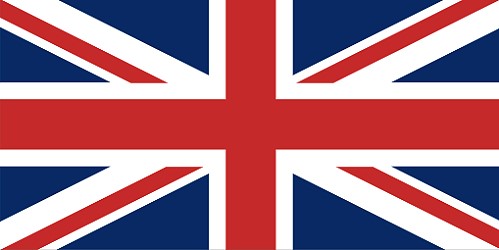
For example, one of the questions was what elements make up the British flag (commonly known as Union Jack -- didn't know that!)?

English Flag   +
Scottish Flag
Ireland's St. Patrick's Cross   +

= UK Flag!
...and poor Wales is left out.
Also, the Welsh Assembly and the Scottish Parliament were established in 1999. I was alive then. Why didn't I ever learn about that in school??

Apparently Ireland has been having problems, too. In just 1921 (which is relatively recent in history terms) Ireland was granted independence and only Northern Ireland is a part of the UK. The only thing I ever knew about Ireland's history was the potato famine (which I also learned they never really recovered from the population loss).

I learned about their government as well. It's made up of the House of Lords, Monarchy and House of Parliament. I learned about what they each do and how many people are in each and how they get appointed or elected. I also learned that the Queen is basically the PR person for the UK.

Also I learned all about the Royal Family and I may be obsessed. Apparently, William was just given the title Duke of Cambridge just because Kate (a commoner!) needed a title (Duchess of Cambridge) when they got married. And when queens get married their husbands don't become king, but rather stay a prince (but king's wives would become queen) because a king outranks a queen and that can't happen.


So much knowledge!!!